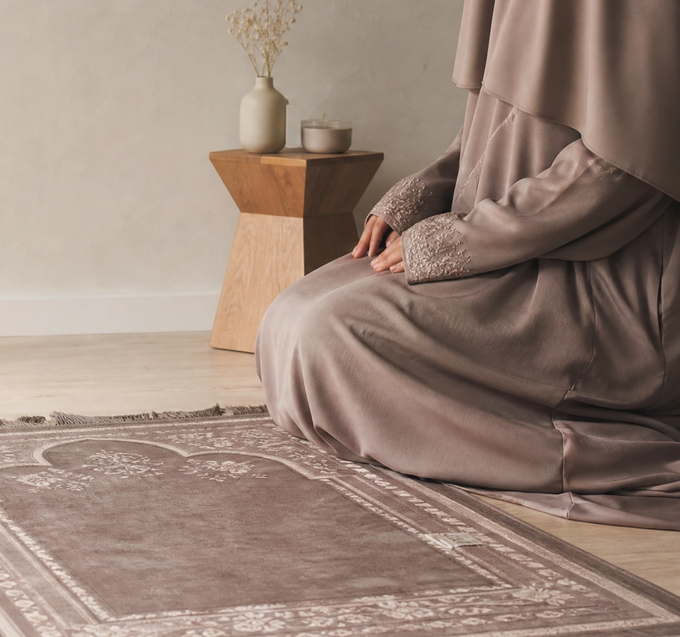
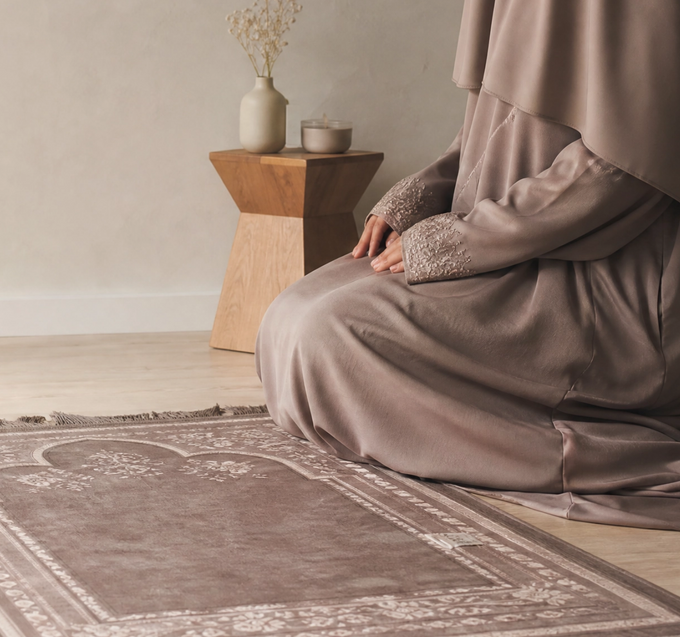
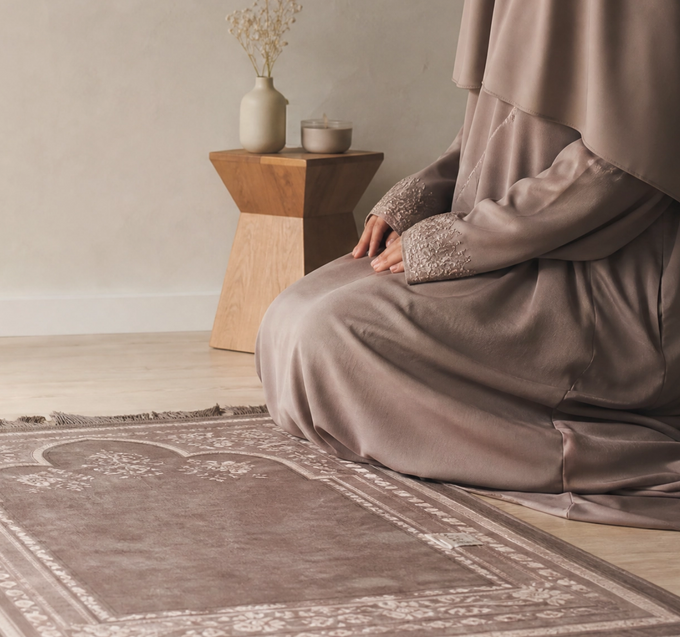
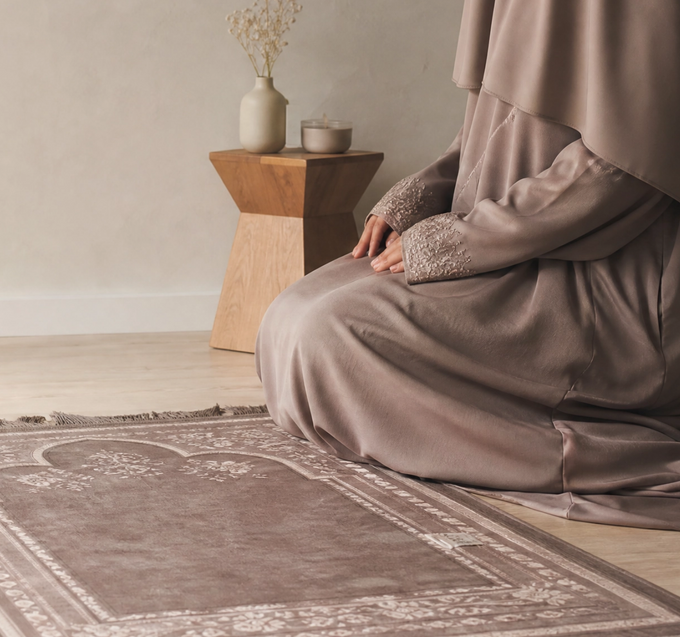
The prayer rug — sajjada in Arabic — is one of the most intimate objects in a Muslim's life. It is not just a practical accessory: it is a sacred boundary between the believer and the earth, a corner of purity during salah.
In this article
Materials: cotton, velvet, silk
- Cotton: The most common and practical material. Machine washable, non-slip, lightweight. Ideal for daily use.
- Velvet: Soft under the knees, visually rich. Requires more care in cleaning.
- Artificial silk (viscose): Intense sheen, vibrant colors. Excellent balance between price and beauty.
- Natural silk: The most valuable material. Pure silk sajjadas from Qom (Iran) or Hereke (Turkey) are true collector's items.
Tip: If you pray on slippery floors (parquet, marble), choose a sajjada with a non-slip latex or natural rubber backing. A rug that slips during prayer interrupts khushu — spiritual concentration.
Standard dimensions and use
The standard dimensions of a sajjada are approximately 70x110 cm (single). These measurements comfortably cover the knees during sujud and open hands during ruku. Smaller versions (50x80 cm) are available for children. Double sajjadas (approx. 120x180 cm) are designed for couples or those who prefer more space.
Traditional symbols and decorations
The most common central element is the mihrab — the ogival arch representing the mosque's niche that indicates the qibla. Around it, geometric patterns (islamic), floral arabesques, or Quranic calligraphy develop.
The travel sajjada
The travel sajjada is compact, foldable or rollable, often with an integrated compass to find the qibla. Some models are made of waterproof fabric, ideal for professionals who travel frequently.
Care and cleaning
- Shake out and air regularly
- Clean with gentle strokes in the direction of the pile
- Hand wash or machine wash (30 degrees C) for cotton models
- Velvet and silk models: dry clean or hand wash with cold water
- Do not fold for storage: roll with the pile inwards
Frequently asked questions
Is there a specific direction for the prayer rug?
Yes, the rug must be oriented towards the qibla (Mecca). The decorative mihrab at the top of the rug indicates the side that should be placed towards the qibla.
Can I pray without a prayer rug?
Yes, the rug is not mandatory. It is sufficient that the ground is clean (tahir). The Prophet prayed on earth, sand, and mat. The rug is a convenience and a tradition, not a religious requirement.
How much does a quality sajjada cost?
A good quality cotton sajjada starts from 15-30 euros. Velvet or artificial silk models range from 30 to 80 euros. Hand-made pure silk rugs can exceed 200-500 euros.
Are Saliha rugs shipped to Italy?
Yes, we ship throughout Italy and Europe. Standard shipping takes 3-5 business days.